‏إظهار الرسائل ذات التسميات Chemistry. إظهار كافة الرسائل

الثلاثاء، 5 مايو 2020

Determination of Ph of strong and weak acids

Determination of Ph

Strong acid: the acid which is completely dissociates into ions

Strong acids examples: HCl, H2SO4, HNO3


because of complete dissociation the concentration of [H+] equals the concentration of the acid it self  so to determine the ph it equals : Ph= -log[H+]


In Weak acids:

weak acids partially dissociate into ions then the concentration of H+ is not equal to concentration of acid it self ,but we have to determine it 

then the [H+]= √ka Ca

Ka is dissociation constant of acid and Ca is concentration of acid {this relation is derived by Ostwalds}

the Ph of weak acid is the same as strong one : Ph= -[H+]
  

Electrochemical series

Any oxidation reduction reaction 

follow the series


This series arrange the elements according to their oxidizing and reducing ability:

the lower elements can replace the higher one in the solution, for instance:


 As shown in the pic. the zinc when placed in copper sulfate it replaces the copper ions by reducing it  while zinc it self is oxidized   

but, if we put a copper piece in zinc solution no chemical reaction occurs this is due to the zinc has higher reducing agent than copper

as previous also if we immerse an iorn in zinc solution nothing will occur due to zinc is higher reducing agent than copper

الاثنين، 24 يونيو 2019

Replacement Titration

Image result for titration

It is type of titration used when back titration or direct titration are insufficient.

Easly It  depends on the ability of metal to bind to titrant (e.g: EDTA) more than another metal.

to be clear we will take an example:

principles: 

  1. 1- Ca+2 has higher affinity to bind to EDTA more than Mg+2
  2. Mg+2 has higher affinity to bind to EBT more than Ca+2
  3. color of EBT when binds to metal is wine red and has blue color in free form

procedure:


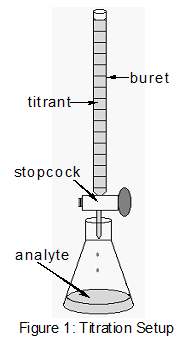
  1. buret : contain EDTA
  2. Conical : contain the EBT-Mg+2 and Ca+2
here the analyte (substance wanted to be mesured) is Ca+2, EBT is the indicator and it binds the Mg+2 giving color (wine red). This because Mg+2 has higher affinity to bind to EBT than Ca+2.

Now lets start titration: 

  • the amount of EDTA added to conical will bind to Ca+2 because its higher affinity to EDTA
  • now after adding more EDTA all free Ca+2 will be bound to EDTA 
  • at the end addition of more EDTA will relase the Mg+2 from EBT and bind to EDTA, so after that free EBT will be in the conical giving blue color which called endpoint of the reaction
so here in replacement titration we depends on affinity of the analyte to both titrant and indicator
for example if we used Murexide indicator the previous reaction can not be occured, because Ca+2 can bind to Murexide.

so in replacement titration the analyte has low ability to bind to the indicator or give no sharp endpoint. also you need to use metal has higher affinity to the indicator as shown up.

ATP, ADP and AMP


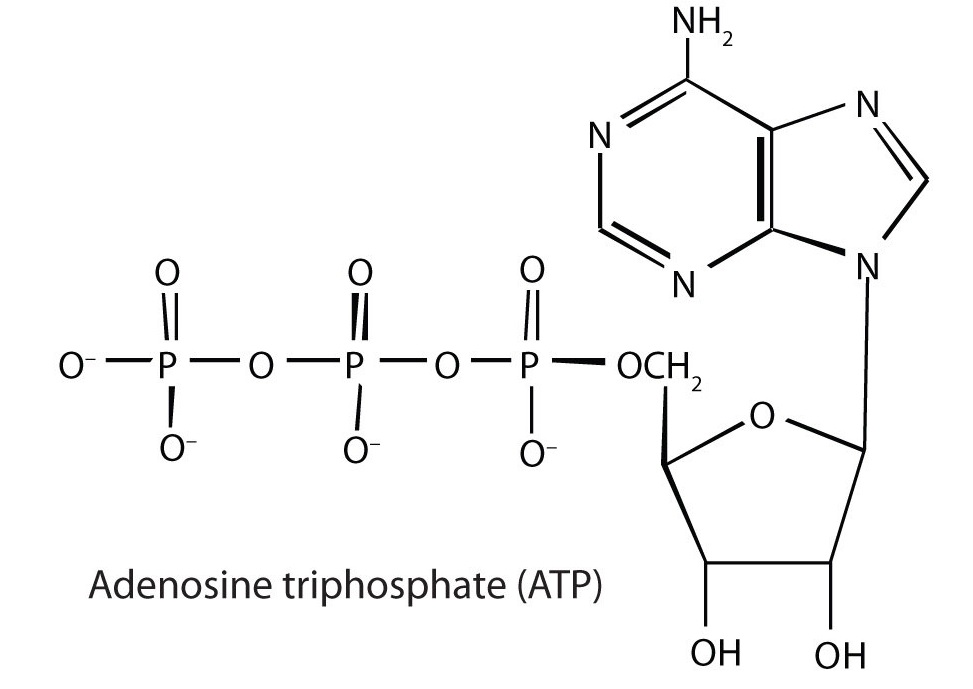
It is adnosine triphosphate as shown in the figure, this molecule contains 3 phosphate groups.

the bond between the first phosphate group which directly bind to the carbon 5 of the pentose sugar is weak bond, but the other 2 bonds between the other 2 phosphate groups are called strong bonds which upon their breakage the high energy produced.

so in biological reactions when body needs energy it breaks the thirds phosphate group releasing energy and yield ADP( Adenosine diphosphate) 


and in some reaction also the second phosphate group also broken and yields AMP( Adenosine monophosphate)  


السبت، 22 يونيو 2019

What is acid?


definition of acid (Arrhenius acid): It is the compound upon dissolve in water gives H+.

according to lewis (lewis acid): It is substance accept electrons from lewis base.

also defined as substance which is oxidized upon reaction.

also important thing of acids is that upon reaction with base it gives water and salt in reaction called neutralization.

examples:

1- HCl + NaOH ------> NaCl +H2O
    acid     base               salt     water
here HCl lose H+ whic binds to (OH)- giving water then Na binds to Cl giving NaCl

2- H2SO4 + Ca(OH)2 -------> 2 H2O + CaSO4
    acid          base                       water    salt

salt meaning precipitation formed by reaction between acid and base.

according to lewis acid: here H+ (has no electrons) react to (OH)- in which oxygen which has negative charge due to excess electron on it.

Related image

negative  oxygen(in hydroxide)  coordinate with 2 electrons for H+ binding it by coordinated bond.

Related image

Vitamin.C and Calcium


Water contain many minerals but, upon boiling there are some minerals called temporary hardness are precipitated. the most mineral precipitated is calcium in the form of calcium carbonate (CaCO3).


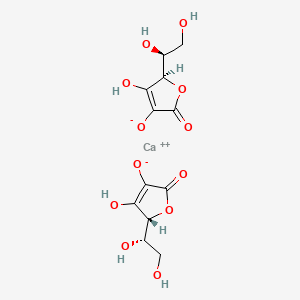
When we add Vitamin.C on water it binds to calcium so upon boiling CaCO3 formation is prevented.So soluble Vitamin.C with calcium still in water.so addition of Vitamin.C prevent calcium loss from boiled water.

If you want to wash your kettle from calcium carbonate precipitation. you can use ascorbic acid or vinegar (acetic acid) or lemonade (citric acid) in washing, because all these acids binds to calcium from calcium carbonate breaking it.

energy currency of cell


How energy is produced from food:
                                              short info. :(At first you should study the digestion process:
Digestion process: It is a process in which enzymes produced from mouth, stomach, and pancrease in addition to bile from liver used in degradation of food (large particles) to small particles.
Fats to fatty acids, carbohydrates to di sugars maltose which then give glucose, proteins to amino acids.

mouth: produce amylase that breaks carbohydrates
stomach: produce 1- pepsin: breaks the proteins to peptides ( small chain of amino acids)
                             2- HCL : helps in denaturation of proteins
In Intestine: pancrease secrets in intestine: 1- alha amylase: covert cabohydrates to maltose then                                                                                   glucose
                                                                     2- lipase: breaks the Fats to fatty acids
                                                                     3- nucleases: breaks nucleic acids to nucletides
Intestine it self : produce: nucleotidases and nucleosidases to give free ribose and phosphate and bases.)

now: glucose get inside process called glycolysis inside cytoplasm of the cell. but, amino acid can also give glucose by degradation of type of amino acids called glucogenic amino acids.which then get also inside glycolysis.

In glycolysis it produces ATP and ends with formation of pyruvate.


pyruvate and Acetyl-CoA both can get inside mitochondria in citric acid cycle whic give more ATP


Each NADH+H gives 3 ATP and each FADH+H gives 1.5 ATP


In case of fatty acids there is beta-oxidation which give large number of NADH+H which convverts to ATP inside mitochondria.and ends with Acetyl-coA formation which then get inside the citric acid cycle for produce more ATP.

note: the cycle below is repeated more and more times in each time 2 carbons are removed from the long fatty acid chains till reach fatty acid contain only 2 carbons (Acetyl-CoA) which then get in the Krebs cycle(Citric acid cycle)


Strong acidic water


Sometimes referred to as Hypochlorous Acid Water, Electrolyzed Oxidizing Water (E.O.W).

Acidic ionized water is not intended for drinking.  It is used externally for cleaning and disinfecting the skin and household surfaces:
                    
strong acidic water: Its PH = 2.5 (highly acidic), It is strong antibacterial, fungi and viruses. so it is used in many sterilizations and help in protection as shown below:
  1. DAILY SKIN CARE: It is added on the skin to improve the complexion of your skin as it works as a natural astringent and removes dirt and oil without the use of chemicals. helps to relieve the aggravation caused by dry, itchy or chapped skin, and contributes to clearing acne, psoriasis, eczema, and athlete’s foot
  2. HAIR CARE: used for washing and rinsing hair, acidic water is good for the scalp and reduces dandruff
  3. MOUTH CARE: use as mouth wash to kill germs, as gargle to help soothe sore throat, or for brushing teeth to remove plaque
  4. ANTISEPTIC: ideal for hand washing, also expedites the healing process of cuts, minor wounds, insect bites, rashes, athlete’s foot, and fungal infections..
  5. STERILIZATION: strong acidic water with a pH under 3.0 kills pathogens on contact and can be used to sterilize cutting boards,  kitchen utensils, and other household surfaces. antibacterial by washing your fruits, vegetables, and meats to effectively kill bacteria.

Determination of Ph of strong and weak acids

Determination of Ph Strong acid : the acid which is completely dissociates into ions Strong acids examples: HCl, H2SO4, HNO3 b...